
Robert McCormick and the Chicago Tribune


By: Jonathan Wanzer ORCiD 0009-0004-9275-7410
Submitted on: February 11, 2026
Submitted to: Dr. Cervantez – Liberty University
Course: HIUS 713 American Entrepreneurship Since 1900
Chicago Citation:
Wanzer, Jonathan. “Robert McCormick and the Chicago Tribune.” Historical Interpretations (blog). February 11, 2026. http://wanzer.org/2026/02/robert-mccormick-and-the-chicago-tribune/.

Abstract
This post discusses the life of Robert Rutherford McCormick and his ascendance to President of the Chicago Tribune. It includes his youth and major life events. It provides some insight into his military service. It outlines his newspaper industry experience. The article concludes with his legacy in the newspaper and media industry.


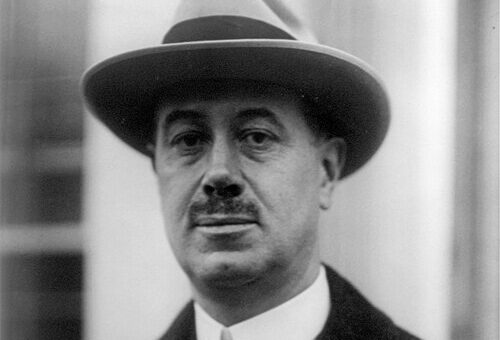
Robert Rutherford McCormick, also known as The Colonel or Colonel McCormick, a rank he earned in the U.S. Army, was born in Chicago, IL, on July 30, 1880, the second son of US Ambassador Robert Sanderson McCormick and Katherine Medill McCormick, daughter of Joseph Medill, who, with five partners, bought the Chicago Tribune in 1855. When he was 9, his father was serving in the diplomatic corps in London. It is in this period that he taught himself to sail and developed his strong sense of self and self-confidence. He had a strong will and exhibited an adventurous spirit. Back in the States, he attended the Groton prep school, where he was described as above average but lacking in motivation. Despite the apparent lack of motivation, he did well enough to get into Yale, where he found his motivation. He was also able to exercise his adventurous nature in hunting in the Hudson Bay area with Inuit guides. Back in Chicago after graduating from Yale in 1903, he decided to go to law school at Northwestern.

This was also a period of political exploration for Robert. Elected as an Alderman and president of the Chicago Sanitary District. He was known for his platform of honest government and willingness to dig in and do the difficult work and not tolerating political hacks on his staff. His conservative views would continue throughout his life, generally opposed to progressives, the New Deal, and the U.S. entry into WWII.

In 1906, his future was on shifting sands. His older brother, Medill, had a nervous breakdown. Medill had been groomed to take over the Tribune at some point. In 1910, Medill and Robert’s uncle, Robert Patterson, editor-in-chief and president of the Tribune, died. The uncertainty of the newspaper’s management put the future of the Tribune in jeopardy. The board was even considering selling the Tribune. In 1911, Robert Rutherford McCormick took the reins of the Tribune, calming the board and stabilizing the business.

Now in his thirties, Robert married Amy Irwin Adams in 1915. True to his adventurous spirit and patriotism, the young couple’s honeymoon would not be a typical one. The couple toured war-torn Europe with Robert writing about the experience along the way. Later that year, home from Europe, Robert felt he needed to do more for his country and enlisted in the Illinois National Guard. He was deployed to protect the southern border to protect the country from Pancho Villa’s raids. In 1917, he signed up for the American Expeditionary Forces and served in France. He earned his Colonel rank in 1918 and a Distinguished Service Medal in 1923, staying a reservist until 1929.

Robert R. McCormick became the sole editor-in-chief in 1925 and would lead the Tribune for five decades, building a media empire including three major papers, the Chicago Tribune, Washington Times-Herald, and New York Daily News, a radio station WGN (1924), and a TV station, also with the WGN callsign (1948). The callsigns stood for World’s Greatest Newspaper, showing his enthusiasm and dedication. The Tribune was a paragon of an institution. Its employees were among the highest paid. They respected the Colonel, and he, in return, respected them. McCormick went to great lengths to ensure the success of the Tribune Company, the parent company that ran the various media outlets, engaging in forestry, buying paper mills, investing in hydroelectric, and shipping companies to provide support services and distribution.

Robert R. McCormick was a leader in the field of journalism, and under his direction, the Tribune would have the largest circulation of all American standard-sized newspapers. It would also lead the world in newspaper advertising revenue. His editorials were known for expressing his conservative journalistic integrity. He was an adamant defender of the First Amendment and Freedom of the Press. One of his primary goals as a journalist was to lay the foundation for journalism to become a bona fide profession. To that end, he introduced the concept of higher education in journalism and helped establish Northwestern’s Medill School of Journalism and provided initial and ongoing funding for the school.

In 1939, the Colonel’s wife, Amy, died. He remarried in 1944 to a close friend of Amy’s, Maryland Mathison Hooper. The Colonel died on April 1, 1955, in Wheaton, Illinois, at the age of 74, survived by his second wife, Mary. Robert Rutherford McCormick was a publisher, editor, media pioneer, war hero, explorer, public servant, civic leader, attorney, and a true philanthropist. He established the Robert R. McCormick Charitable Trust, which turned his 500-acre estate, Cantigny, named after the village, where he served in France in WWI, into a funded public park. The trust also funds early childhood education programs in Chicago and community programs in the South and West sides of Chicago.

Robert R. McCormick was a privileged man. Born into a generationally wealthy family, well-traveled, and well-educated, he held conservative values and a strong work ethic, a sense of duty and responsibility to his family, his country, and his community.

Sources

Gies, Joseph. The Colonel of Chicago: A Biography of the Chicago Tribune’s Legendary Publisher, Colonel Robert McCormick. Dutton Adult. 1979

Olmsted, Kathryn S. The Newspaper Axis: Six Press Barons Who Enabled Hitler. Yale University Press. 2022.

“Our Benefactor.” Robert R. McCormick Foundation, website. Accessed February 10, 2026, https://www.mccormickfoundation.org/about-us/our-benefactor/.

“Robert R. McCormick.” Britannica, website. Accessed February 10, 2026, https://www.britannica.com/biography/Robert-R-McCormick.

Robert R. McCormick. Personal Correspondence, 1920-1955, I-63. Charles Deering McCormick Library of Special Collections. https://findingaids.library.northwestern.edu/repositories/7/resources/1474 Accessed February 10, 2026.

“Robert R. McCormick Biography.” First Division Museum at Cantigny, website. Accessed February 10, 2026, https://www.fdmuseum.org/researchers/robert-r-mccormick-biography/.

Smith, Richard Norton. The Colonel: The Life and Legend of Robert R. McCormick. C-SPAN video, 1:05:06. https://www.c-span.org/program/public-affairs-event/life-and-legend-of-robert-r-mccormick/65204.
World War I, Newspapers, and the CPI


By: Jonathan Wanzer ORCiD 0009-0004-9275-7410
Submitted on: January 30, 2026
Submitted to: Dr. Cervantez – Liberty University
Course: HIUS 713 American Entrepreneurship Since 1900
Chicago Citation:
Wanzer, Jonathan. “World War I, Newspapers, and the CPI.” Historical Interpretations (blog). January 30, 2026. http://wanzer.org/2026/01/world-war-i-newspapers-and-the-cpi/.

Abstract
This post provides a brief history of the newspaper industry. It covers industry growth through the Gilded Age. It introduces George Creel and his relationship with Woodrow Wilson. The creation of the Committee on Public Information. How CPI and Creel disseminated information and sold America on joining the war in Europe. It concludes with the industry recovering post-war.


Postbellum America was experiencing dramatic changes in all areas of life. The newspaper industry was no different; the period from 1830 to 1930 is often referred to as the Golden Age of American newspapers, and many of the industry’s greatest changes in this period took place between 1880 and 1900. Technology improvements introduced mass production presses, faster communication, and broader reach, all of which served the industry’s need to expand and interconnect. The introduction of the penny-press publishing model, the development and rapid growth of newspaper chains, and the consolidation of chains into empires, exemplified by Joseph Pulitzer and William Randolph Hearst, all contributed to the industry’s expansion in this period. Other models were also taking form in this period, such as yellow journalism. Sensationalism, hyperbole, and exaggeration were regular features of the newspaper industry. At the same time, professionalization in journalism and muckraking became growing parts of the industry.

Sensationalism, hyperbole, and exaggeration have always been part of the press. What distinguishes this period is the motivation behind it. While most newspapers had been funded by political parties before this time, they were now commercial interests tied only to the owner’s political interests. Newspapers were just as likely to attack either party if they could sell more papers. If money was coming in, editors would have greater latitude. Professionalism was starting to take root, bringing about the muckrakers, what we would now call investigative journalists. These muckrakers were also given some freedom in whom they went after, especially if it was likely to sell more papers. While politics was still a motivating factor in the media, the economics of the business were of greater concern. The media’s acceptance of sensationalism and hyperbole would set the stage for its usefulness in propaganda dissemination.

George Creel (1876-1953) began his career in the press in 1896 at the Kansas City World as a reporter. He would work at many newspapers and own several before his involvement with Woodrow Wilson’s (1886-1924) re-election campaign in 1916. He had been a Wilson supporter for a while when he met Wilson in 1912, and they had had several conversations on politics and the press before 1916. As a newsman, Creel was well-versed in advertising and the nascent practice of managing public perceptions, which we now recognize as the field of Public Relations. Creel and Wilson would have several conversations during the 1916 campaign where Creel promoted a way to sell the American people on joining the war in Europe. A key part of this would involve the media distribution channel with the greatest reach, newspapers. Several of Wilson’s cabinet members proposed a full media blackout and imposed censorship. Creel advised Wilson, proposing no blackout or censorship, instead, the government would create a clearinghouse that would clear and disseminate government information and requests for information. The press would be expected to sign an agreement that they would submit any articles even tangentially related to the war effort for clearance, and in exchange, they would have a firehose of information to drink from, all pre-cleared through this clearinghouse. With only a few dissenters, mostly in the War Department, Creel’s plan was accepted, and by Executive Order 2594, the Committee on Public Information was formed on April 13, 1917, just seven days after America joined the war in Europe.

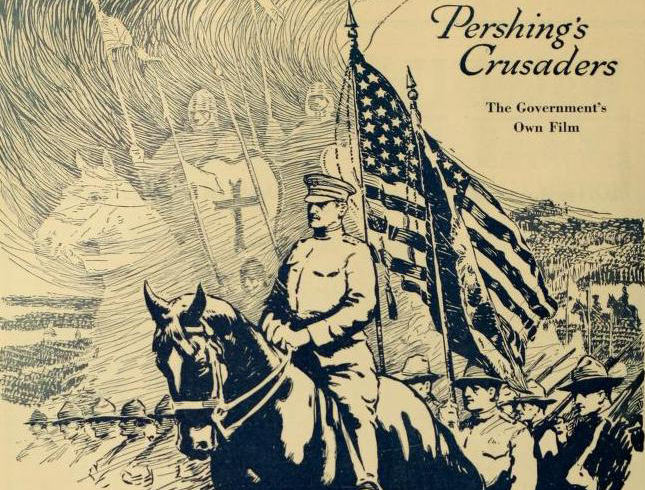
The Committee on Public Information (CPI) had two primary responsibilities: to manage and clear for dissemination all information outside of military channels and to the public on the United States involvement in the war in Europe, and to sell the American population on the war. In two weeks after the establishment of the CPI, George Creel had reached out to his media contacts, establishing contact with newspaper owners and editors across the nation to get them to sign agreements with the CPI to clear all internally generated stories. Many of the owners and editors were skeptical about the “article clearance” being just another form of censorship, and they weren’t sure that the CPI could serve so many outlets. By the end of May, a large majority of newspapers had signed the agreement, and the CPI was generating hundreds of articles per day. As the CPI expanded in the weeks to come, it established regional offices around the country to clear articles, provide pre-cleared articles, and generate pre-cleared articles of local and regional interest. In just a couple of months, the CPI was generating thousands of articles a day. They were so successful that the CPI’s scope was expanded on September 25, 1917, to establish divisions for pictures, films, and other publications.

Early in the CPI’s existence, it was outputting thousands of columns of news per day, and it was by far the largest news organization in the country. The content it produced was for the end consumers of news, the American people. It could have become a state-run news organization, which was recognized by the media moguls and small paper owners of the day. They had a few options, but the only option that would not negatively affect their bottom line was to work with the CPI. CPI provided massive amounts of content that could effectively go straight to typesetting. They also had a large variety of topics to choose from. A paper could produce an entire issue from CPI-generated columns alone. Most papers continued to generate content internally, but the volume was considerably reduced, subsequently reducing newsroom costs, all while increasing circulation to wartime readers. Most businesses that bought ad space continued to advertise, though they tended to lean towards patriotic themes in their advertising. After the war, the CPI was abolished in August 1919. At this time, the Associated Press, which was founded in 1846, took its pre-CPI place as the largest news gathering organization in America.

Sources

  • Axelrod, Alan. Selling the Great War: The Making of American Propaganda. Palgrave Macmillan, 2009.
  • Creel, George. How We Advertised America: The First Telling of the Amazing Story of the Committee on Public Information That Carried the Gospel of Americanism to Every Corner of the Globe. Harper & Brothers, 1920.
  • Creel, George. Rebel at Large: Recollections of Fifty Crowded Years. G.P. Putnam’s Sons, 1947.
  • Kingsbury, Celia Malone. For Home and Country: World War I Propaganda on the Home Front. University of Nebraska Press, 2010.
  • Schudson, Michael. Discovering the News: A Social History of American Newspapers. Basic Books, 1978.
  • Smythe, Ted Curtis. The Gilded Age Press, 1865-1900. Praeger, 2003.

A Soft Spot for Newspapers

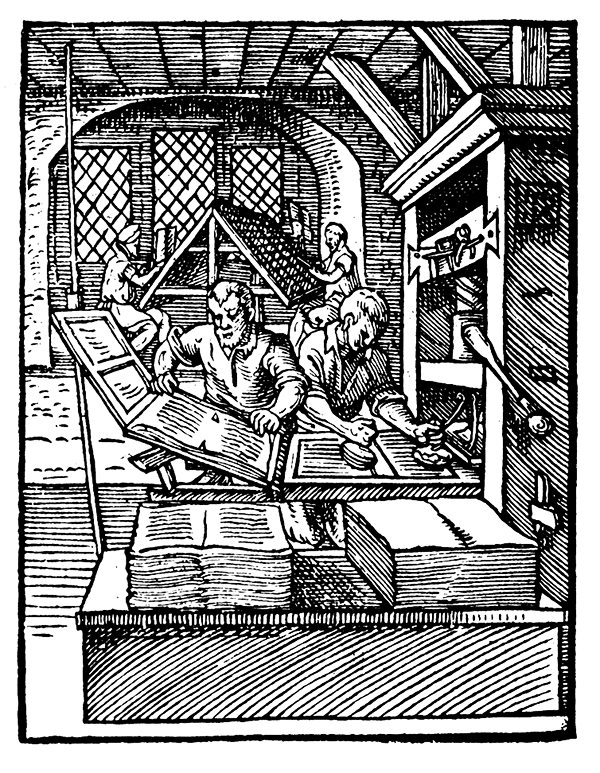
I have always had an affinity for newspapers, the physical medium, more so than the content. In many ways, it is like my affinity for books, the physicality of the medium. As long as I can remember, I have been interested in manual printing presses and the early small-run automated presses of the late 18th and early 19th centuries. I am not much of a journalist, but I have done ad and magazine design work as well as photography, along with the digital processing of text and visual components. Over the last year or so, my affinity for the idyllic small-town press has grown—the kind of paper you might find in Andy Griffith’s Mayberry.

My research on propaganda has me doing background on the history of newspapers in America. The two have been close companions since the introduction of broadsheet media, soon after the invention of the printing press. America’s entire history includes propaganda in newspapers from the colonial period to the present. I have an assignment due Sunday on how the turn of the 20th-century newspaper industry was affected in a business sense by the Committee on Public Information’s engagement with the press in both selling America on the war and disseminating information during the war.

One of the first illusions shattered by this research was the idea of the idyllic small-town paper. When they did exist, they were likely a political or special-interest paper from around 1800-1880. By the 1900s, mass-market press, muckrakers, and yellow journalism were already well established. The press lords began to dominate the newspaper industry shortly after the penny-press movement started in the 1830s. Their reign would continue through the Gilded Age, well into the 1930s.

Aside from bringing historic reality into focus, this research has furthered my interest in the restoration of manual and semi-manual presses from the 19th and early 20th centuries. It is also furthering my interest in producing limited press runs of broadsides. What has been added to my list of potential interests is journalism. Journalism from the perspective of that idyllic small-town newspaper, or just maybe, some contemporary journalism flavored with a bit of sass and humor in the spirit of the younger Franklin brother in Philadelphia.